
1.jpg)
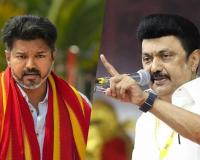
Following the 2026 Assembly elections, the newly formed administration has unveiled a governance model centered on youth participation, broad-based social representation and coalition politics, dismantling decades of rigid political structures dominated by the state’s traditional power blocs.
At the center of this political transformation is the formation of Tamil Nadu’s first-ever coalition cabinet. For more than fifty years, the state’s governance structure had been defined by uninterrupted single-party administrations. The TVK-led government has now ended that political tradition by formally embracing coalition rule.
The cabinet expansion has also triggered an unprecedented generational shift, resulting in the youngest ministry in Tamil Nadu’s political history. Out of the 33 ministers appointed to the council, 11 are below the age of 40, reflecting an intentional strategy to prioritize young leadership and new political perspectives over established political networks.
Chief Minister Vijay has additionally opted for an extensive administrative reset, with only one member of the 33-member council possessing previous ministerial experience. The overwhelming presence of first-time ministers underlines the administration’s attempt to project itself as a completely new political alternative in the state.
Beyond the generational transition, the composition of the cabinet signals a major restructuring of Tamil Nadu’s traditional social representation model. In a significant move toward social inclusion, the administration has appointed seven Dalit ministers to the cabinet. The number is expected to increase to eight after alliance partner VCK formally inducts its representatives into the ministry.
The representation marks a sharp contrast with the previous DMK government, which, despite positioning social justice at the center of its political ideology, had included only four Scheduled Caste ministers in its cabinet.
The new ministry also reflects an extensive multi-community and pan-caste representation strategy, with several smaller and historically underrepresented social groups receiving direct political participation within the government structure. The composition of the cabinet appears designed to project an image that rises above caste and religious considerations.
One of the most striking ideological departures in the new administration is the inclusion of two Brahmin ministers in the cabinet. The move represents a major deviation from the political approach traditionally followed by both the DMK and the AIADMK, parties that historically avoided appointing Brahmin leaders to ministerial positions.
Even former AIADMK chief J Jayalalithaa, herself a Brahmin, refrained from inducting members of the community into ministerial roles during her tenure in order to preserve the electoral framework associated with Dravidian politics.
The foundations of the Dravidian movement were built on opposition to Brahmin dominance and advocacy for rationalism and social justice. Anti-Brahmin sentiment remained a significant component of the state’s social justice discourse in Tamil Nadu, where the Brahmin population is estimated to constitute less than two percent of the population.
By breaking with this long-standing political convention, Chief Minister Vijay appears to be signaling a willingness to engage with a changing social and electoral landscape.
The cabinet restructuring ultimately reflects a broader political strategy aimed at dismantling the long-standing dominance of the DMK and AIADMK in Tamil Nadu politics. Through a combination of youth leadership, coalition governance and expanded social representation, the new administration is positioning itself as a modern and inclusive alternative to the state’s traditional political order.
However, with the executive largely composed of first-time ministers and political newcomers, the central challenge before the government will be whether its ambitious model of representative diversity can successfully translate into stable governance and effective administrative performance.
About The Author







Comment List